 LU / EUR










 Order Status
 Return Status
 Frequently Asked Questions


Nordic Walking: Why Swapping Running for Healthy Walking Makes Sense
 Be Lenka
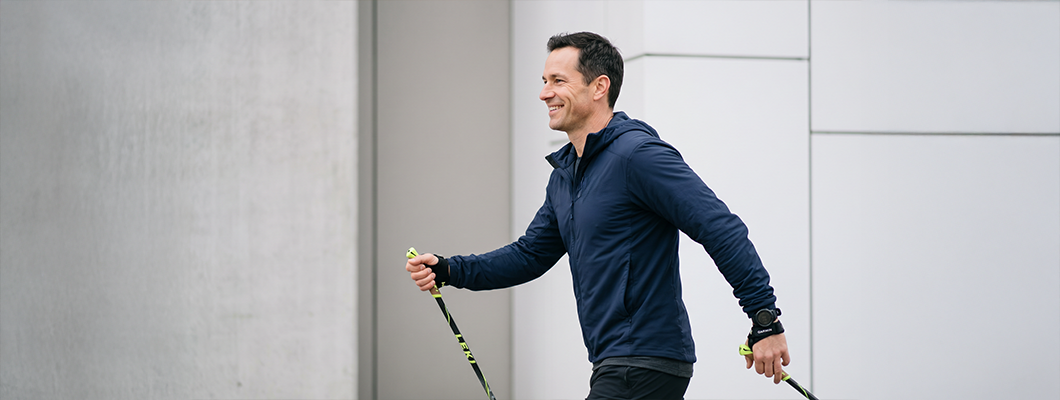
Most of us have tried to take up running at some point. Some stick with it and go on to run marathons. Others never quite find their rhythm. And that is perfectly fine. Running is not for everyone. If running causes joint pain or simply does not bring you joy, yet you still want a healthy and effective way to stay active, Nordic walking is an excellent alternative. With proper technique, it improves posture, breathing and overall strength. When combined with barefoot shoes, this natural way of walking becomes even more intuitive, efficient and beneficial for the body.
Article overview
- What is Nordic walking
- Why Nordic walking can be a better choice than running
- How Nordic walking supports healthy movement
- How to get started: What you need and what matters most
- Common mistakes: What to avoid in Nordic walking
- Expert recommendations: Why Nordic walking and barefoot shoes work so well together
- Summary
- FAQ

What is Nordic walking?
Nordic walking is a dynamic form of walking using poles. It was originally developed as off season training for cross country skiers and has since become one of the most popular and accessible physical activities worldwide. It is a conscious, rhythmic walk that engages the entire body. The legs, core and upper body work together without placing excessive strain on the joints. Nordic walking is easy to learn, suitable for both beginners and experienced walkers, and can be practiced almost anywhere.
Why does Nordic walking work better than running?
Nordic walking activates the whole body while being significantly gentler on joints and tendons. Running involves repeated impact, which does not suit everyone. Walking with poles helps soften these forces, supports a steady rhythm and naturally encourages an upright posture. The arms become an active part of the movement, helping distribute the load more evenly across the body.
Barefoot shoes are an ideal companion for Nordic walking. They allow the muscles of the feet to activate with every step, which significantly improves stability, balance and overall gait quality.
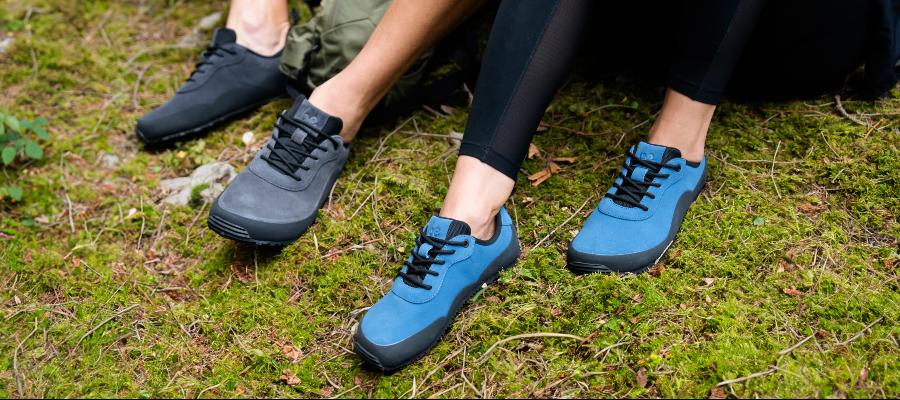
Practical tips for proper technique
- Let your arms move naturally in sync with your torso
- Keep your posture upright and relaxed
- Breathe deeply into your diaphragm
- In barefoot shoes, aim for full foot contact with the ground
How does Nordic walking support healthy movement?
Regular Nordic walking can have a profound effect not only on fitness levels, but also on overall movement quality. Recent studies show that this type of walking improves core function, strengthens stabilising muscles and enhances coordination.
Barefoot walking plays an important role in this process:
- It improves proprioception, the body’s ability to sense movement and position
- It teaches the feet to work independently and strengthens them
- It supports a healthier stride thanks to a spacious toe box and a flexible sole
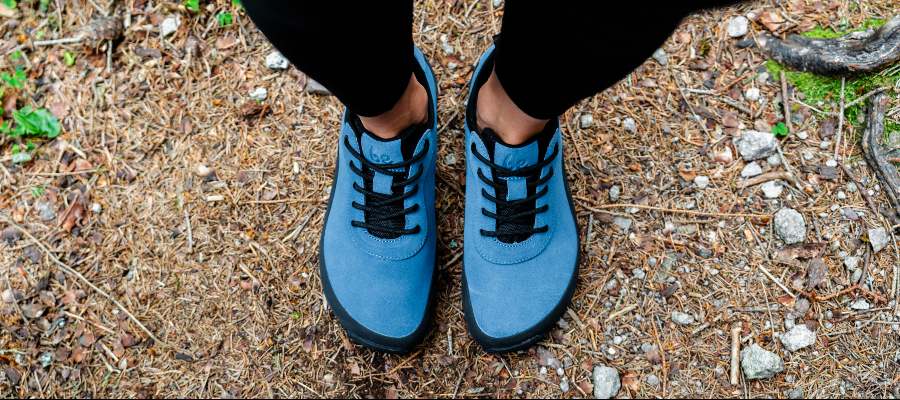
These benefits become even more pronounced during Nordic walking, as the entire body moves in a natural, coordinated rhythm.
| Benefit | Nordic walking | Nordic walking with barefoot shoes |
|---|---|---|
| Stability | High | Very high |
| Foot activation | Moderate | High |
| Terrain awareness | Moderate | High |
| Posture | Improved | Further supported by a natural walking pattern |
| Overall comfort | High | Natural and relaxed |
How to get started: What you need and what matters most
Getting started does not have to be complicated. The key is to set the right pace, focus on proper technique and choose suitable footwear.
Many people overlook how important shoes are even in Nordic walking. Barefoot shoes allow you to respond to the terrain more naturally, maintain better balance and actively engage the muscles of the feet with every step.
Practical tips for beginners
- Choose the right pole length A commonly recommended formula is your height multiplied by 0.68.
- Pick well fitting barefoot shoes
- They support a natural walking pattern and help improve foot function
- For accurate sizing, we recommend using our size guide
- Start with shorter walks 20 to 40 minutes is enough for the initial adaptation of your feet to barefoot shoes
- Focus on the rhythm of your arms and legs
- Gradually increase time and intensity Once the technique feels comfortable, slowly extend the length and pace of your walks
Common mistakes: What to avoid in Nordic walking
Some mistakes can reduce the overall effectiveness of Nordic walking. The good news is that most of them are easy to correct once you are aware of them.
Most common mistakes
- Using poles that are too long or too short
- Walking heavily into the heels with excessive impact
- Taking steps that are too long
- Keeping the torso stiff throughout the walk
- Avoiding barefoot shoes and choosing footwear with thick soles that reduce ground awareness
Expert recommendations: Why Nordic walking and barefoot shoes work so well together
Experts agree that Nordic walking delivers its greatest benefits when the body moves naturally and in coordination. Barefoot shoes support this by allowing the feet to respond to the terrain, activating stabilising muscles and encouraging healthy movement from the very first step.
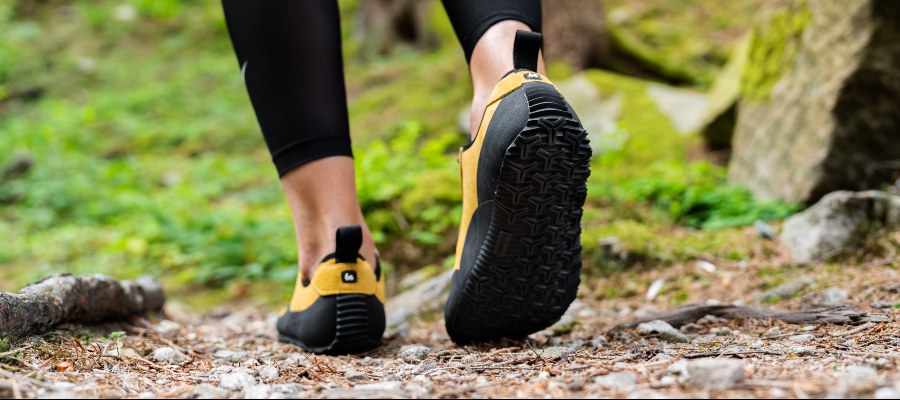
At Be Lenka, this synergy is key:
- A spacious toe box allows the toes to spread naturally, without pressure or distraction during walking
- A flexible sole enhances sensory feedback and overall body awareness
- A minimalist shoe design helps keep the body in a neutral, well aligned position
Summary
Nordic walking is an accessible, joint friendly and highly effective form of movement. When combined with barefoot shoes, it becomes even more natural, supporting better posture, greater stability and active foot engagement. If you are looking for a healthy way to walk that feels good and works in harmony with your body, this combination is an excellent place to start.
Are barefoot shoes suitable for Nordic walking on uneven terrain?
+ -Yes. A flexible sole and a spacious toe box help improve stability and support a more natural walking pattern, even on varied surfaces.
How should I choose barefoot shoes for Nordic walking in spring?
+ -Focus on lightweight, breathable models with a thin, flexible sole that allows natural foot movement and good ground feedback.
How often should I practice Nordic walking if I am a beginner?
+ -Start 2 to 3 times a week for 20 to 40 minutes. The body adapts quickly, especially when the feet are allowed to move naturally and gradually build strength.
Can I combine Nordic walking and barefoot walking if I experience back pain?
+ -Yes. For many people, this combination helps activate the core and reduce pressure on the spine. If the pain is strong or persistent, consulting a healthcare professional is recommended.
Sources
- Tschopp, M. et al. (2022). Effects of Nordic Walking on Cardiovascular Health and Functional Mobility. Scandinavian Journal of Medicine & Science in Sports.
- Müller, R., & Fink, C. (2023). Foot Muscle Activation During Barefoot vs. Shod Walking. Journal of Biomechanics.
- Kim, Y. et al. (2022). Nordic Walking as a Full-Body Exercise: A Systematic Review. Sports Medicine.
Do you think others should know about this too?
Share it :)